
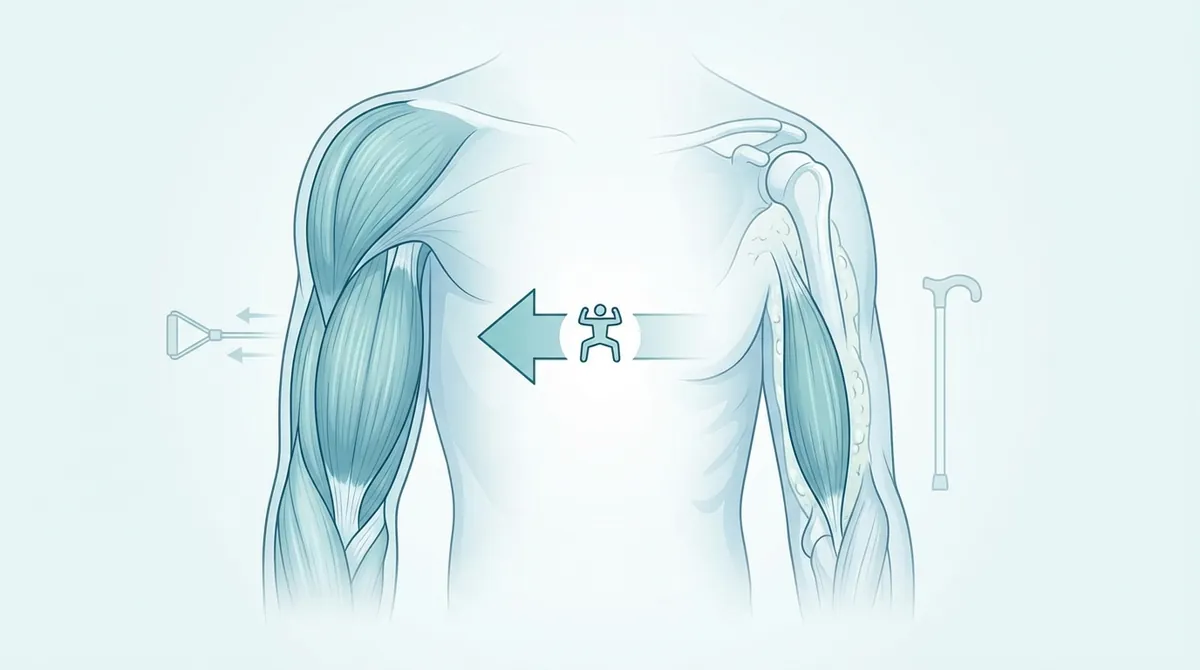
Title: Sarcopenia: Loss of Muscle Mass with Age and How to Counteract It
- Sarcopenia: muscle, strength, performance loss with age.
- Increases risk of falls, fractures, disability, mortality.
- Muscle strength most predictive parameter, not just mass.
- Multidisciplinary approach essential; consult a doctor or physical therapist.
Human aging is a complex physiological process, characterized by a progressive alteration of biological functions and structural modifications affecting multiple systems. Among the most relevant clinical and rehabilitative challenges in geriatrics and adult sports medicine, the condition defined as sarcopenia muscle loss with age represents a critical factor for maintaining functional autonomy and quality of life. This phenomenon is not limited to a simple decrease in muscle volume but constitutes a true geriatric syndrome, characterized by a generalized decline in muscle mass, strength, and performance. Its onset has profound repercussions, increasing the risk of falls, fractures, physical disability, and mortality. Addressing this issue requires a multidisciplinary approach that integrates medical, nutritional, and physiotherapeutic knowledge. It is essential to emphasize that, when faced with symptoms of weakness or functional decline, it is always necessary to consult your doctor or physical therapist for an accurate evaluation and a personalized intervention plan.
What is sarcopenia muscle loss with age and what are the pathophysiological mechanisms
The term sarcopenia, originally coined by Rosenberg in 1989, derives from the Greek “sarx” (flesh) and “penia” (loss). Initially described only as the decline in muscle mass related to aging, the clinical definition of **sarcopenia muscle loss with age** has evolved over time. Currently, international guidelines, such as those drafted by the European Working Group on Sarcopenia in Older People (EWGSOP2), place primary emphasis on the loss of muscle strength (dynapenia), considered the most predictive parameter of adverse clinical outcomes, followed by the reduction in muscle quantity and quality (Cruz-Jentoft et al., 2019).
Alterations at the cellular level and in muscle architecture
Skeletal muscle undergoes profound structural changes with advancing age. A progressive atrophy is observed, selectively affecting type II muscle fibers (fast-twitch fibers), responsible for generating explosive strength and power. This explains why older people lose the ability to perform rapid movements, such as recovering balance after a stumble, even before losing absolute strength. In parallel, there is a reduction in the total number of muscle fibers due to apoptosis (programmed cell death) and the loss of alpha motoneurons at the spinal cord level. The process of denervation and reinnervation leads to a remodeling of motor units, which become fewer in number but larger, reducing the fineness of motor control.
Adipose infiltration and muscle quality
Another crucial aspect of pathophysiology is the alteration of muscle “quality.” With aging, contractile muscle tissue is progressively replaced by adipose tissue (myosteatosis) and fibrotic connective tissue. This intramuscular fat infiltration compromises the mechanics of contraction, reducing specific strength (strength generated per unit of muscle area) and contributing to the onset of local insulin resistance, which in turn hinders muscle protein synthesis.
Etiology: Primary and Secondary Causes of Sarcopenia
Sarcopenia is considered a multifactorial pathology. It is classified as primary when it is exclusively linked to aging, in the absence of other obvious causes. However, in most clinical cases, secondary sarcopenia is observed, where age is combined with other triggering or aggravating factors.
Hormonal and metabolic factors
The endocrine system plays a prominent role in maintaining muscle homeostasis. With age, there is a physiological decline in anabolic hormones. In men, the reduction in testosterone levels (andropause) is directly correlated with the loss of lean mass. In women, the drop in post-menopausal estrogen accelerates muscle and bone decline. Furthermore, the secretion of growth hormone (GH) and insulin-like growth factor 1 (IGF-1), essential for tissue regeneration, decreases. Added to this is the phenomenon of “anabolic resistance,” which is the reduced ability of aging muscle to stimulate protein synthesis in response to amino acid intake or physical exercise (Burd et al., 2013).
The role of systemic inflammation (Inflammaging)
Scientific research has highlighted how aging is accompanied by a state of low-grade chronic inflammation, defined as “inflammaging” (Franceschi et al., 2000). The increase in circulating levels of pro-inflammatory cytokines, such as Interleukin-6 (IL-6) and Tumor Necrosis Factor alpha (TNF-alpha), promotes protein catabolism and inhibits anabolic signals, accelerating the degradation of muscle proteins through the activation of the ubiquitin-proteasome system.
Lifestyle, inactivity, and malnutrition
Physical inactivity is perhaps the most impactful modifiable risk factor. Prolonged bed rest or a sedentary lifestyle dramatically accelerate muscle loss. From a nutritional perspective, inadequate protein intake, often caused by loss of appetite, chewing problems, or altered taste (anorexia of aging), deprives the muscle of the fundamental building blocks for its renewal. Vitamin D deficiency is also strongly associated with muscle weakness and an increased risk of falls.
Impact on Professional Categories: INAIL Data
The progressive aging of the workforce represents a primary issue for occupational medicine and ergonomics. The loss of strength and muscle mass significantly impacts the ability to sustain the biomechanical loads required by numerous work tasks. Data provided by the National Institute for Insurance against Accidents at Work (INAIL) highlight a strong correlation between the advancing age of workers and the incidence of musculoskeletal disorders.
Biomechanical overload and aging
According to INAIL reports on occupational diseases, musculoskeletal disorders (MSDs) represent the majority of claims. In workers over 50, the physiological reduction in tissue tolerance (muscles, tendons, cartilage) to repeated or prolonged loads clashes with the physical demands of work. Sectors such as construction, logistics, agriculture, and healthcare (manual patient handling) are particularly at risk. Sarcopenia aggravates this picture: a weak muscle is unable to adequately stabilize joints, transferring mechanical stress to passive structures (ligaments and intervertebral discs) and favoring the onset of hernias, tendinopathies, and osteoarthritis.
| Work Sector | Biomechanical Risk Factors | Impact of Muscle Decline (Over 50) |
|---|---|---|
| Construction and Building | Lifting heavy loads, incongruous postures, vibrations. | Exponential increase in the risk of acute and chronic low back pain; higher incidence of injuries due to loss of balance. |
| Healthcare and Assistance | Manual patient handling, prolonged standing shifts. | High incidence of pathologies affecting the lumbar spine and shoulder (rotator cuff) due to stabilizing weakness. |
| Logistics and Transport | Repetitive movements, prolonged fixed postures. | Risk of upper limb disorders; early fatigue reducing reflexes and increasing the risk of accidents. |
| Office Work (VDU Operators) | Extreme sedentary lifestyle, static postures. | Acceleration of sarcopenia due to disuse; onset of neck pain and widespread joint stiffness. |
To mitigate these risks, it is essential to implement participatory ergonomics programs and promote preventive physical activity. Workers who experience functional limitations are always recommended to consult the company’s occupational physician or their doctor or physical therapist to assess fitness for duty and undertake reconditioning pathways.
Diagnosis and Clinical Evaluation of Sarcopenia
Timely diagnosis is fundamental for establishing effective interventions. The diagnostic algorithm proposed by EWGSOP2 is based on a phased approach: identification of suspected cases (Find), clinical evaluation (Assess), diagnostic confirmation (Confirm), and determination of severity (Severity).
Initial screening: The SARC-F questionnaire
The first step involves using the SARC-F questionnaire, a rapid screening tool that investigates five domains: strength (lifting a weight), assistance with walking, rising from a chair, climbing stairs, and number of falls in the last year. A score equal to or greater than 4 indicates a risk of sarcopenia and requires further investigation.
Assessment of muscle strength (Assess)
- Handgrip strength dynamometry: Measures hand grip strength using a dynamometer. It is a reliable indicator of global muscle strength and a strong predictor of adverse clinical outcomes.
- Chair Stand Test: Evaluates lower limb strength by measuring the time required to stand up and sit down from a chair 5 consecutive times without using the arms.
Confirmation of muscle mass (Confirm)
If strength tests are deficient, muscle mass quantification is performed. The most commonly used instrumental methods include:
- DXA (Dual-energy X-ray Absorptiometry): Considered the clinical gold standard for body composition assessment, it allows for the measurement of Appendicular Skeletal Muscle mass (ASM), i.e., muscle mass of the limbs.
- BIA (Bioelectrical Impedance Analysis): A more accessible and less expensive method that estimates lean mass through the resistance of tissues to the passage of a low-intensity electrical current.
Assessment of severity: Physical performance (Severity)
Sarcopenia is considered “severe” if, in addition to low strength and low muscle mass, reduced physical performance is found. This is measured using tests such as Gait speed, the Timed Up and Go test (TUG), or the Short Physical Performance Battery (SPPB).
| Parameter Assessed | Test Used | Men’s Cut-off | Women’s Cut-off |
|---|---|---|---|
| Muscle Strength | Handgrip strength | < 27 kg | < 16 kg |
| Muscle Strength | Chair stand test (5 rises) | > 15 seconds | > 15 seconds |
| Muscle Mass | ASM/height² (via DXA) | < 7.0 kg/m² | < 5.5 kg/m² |
| Physical Performance | Gait speed | ≤ 0.8 m/s | ≤ 0.8 m/s |
Prevention and Treatment of sarcopenia muscle loss with age
The management of **sarcopenia muscle loss with age** requires an integrated approach that combines nutritional interventions, lifestyle modifications, and, in specific cases, pharmacological support. The primary objective is to counteract anabolic resistance and provide the necessary stimuli for muscle hypertrophy or, at least, for the maintenance of existing mass.
Nutritional Interventions: The role of proteins
Nutrition plays a pivotal role. Current guidelines suggest that the protein requirement for older adults is higher than for young adults. While the standard recommended daily allowance (RDA) is 0.8 g/kg of body weight, to counteract sarcopenia, an intake of 1.0 – 1.2 g/kg/day is recommended, which can increase up to 1.5 g/kg/day in the presence of acute or chronic pathologies (Bauer et al., 2013).
Not only the total quantity is important, but also the distribution of proteins throughout the day. It has been shown that consuming approximately 25-30 grams of high-quality protein with each main meal maximizes the stimulation of muscle protein synthesis. Among amino acids, Leucine (an essential branched-chain amino acid) holds particular importance, as it acts as a true molecular signal capable of activating the mTORC1 pathway, the main switch for cellular protein synthesis. Foods rich in leucine include dairy products, meat, fish, and eggs.
Vitamin D and Omega-3 Supplementation
Vitamin D deficiency is endemic in the older population and is correlated with muscle weakness and balance alterations. Vitamin D supplementation, if serum levels are deficient, is recommended to improve muscle function and reduce the risk of falls. Furthermore, recent studies suggest that Omega-3 polyunsaturated fatty acids (EPA and DHA) possess anti-inflammatory properties capable of mitigating inflammaging and improving muscle sensitivity to anabolic stimuli. Before undertaking any supplementation regimen, it is imperative to consult your doctor or physical therapist to avoid drug interactions and establish appropriate dosages.
Pharmacological Therapies
Currently, no drugs are specifically approved by regulatory agencies (such as EMA or FDA) for the exclusive treatment of sarcopenia. Research is exploring various molecules, including selective androgen receptor modulators (SARMs), monoclonal antibodies against myostatin (a natural inhibitor of muscle growth), and ghrelin analogs. However, at present, physical exercise and nutrition remain the irreplaceable pillars of treatment.
The Role of Physiotherapy in Sarcopenia Management
Physiotherapy represents the most effective therapeutic intervention, free of side effects, to counteract muscle decline. The physical therapist, as a healthcare professional specialized in movement, is the figure responsible for functional evaluation and the prescription of therapeutic exercise, dosed like a true medication.
Resistance Exercise (Resistance Training)
Resistance training (with weights, isotonic machines, or elastic bands) is the first-line intervention for sarcopenia. Unlike aerobic activity, which improves cardiovascular capacity but has limited effects on muscle mass, resistance exercise induces micro-lesions at the muscle fiber level which, during the recovery phase, stimulate hypertrophy and an increase in strength.
To be effective, training must follow the principle of progressive overload. Guidelines suggest moderate-to-high intensity, corresponding to 60-80% of the one-repetition maximum (1RM), for 2-3 days a week. Exercises should involve large muscle groups (legs, chest, back). It is fundamental that execution occurs under the supervision of a professional to ensure correct movement biomechanics and prevent joint injuries. The importance of relying on your doctor or physical therapist for the development of a safe training program calibrated to concomitant pathologies (e.g., osteoporosis, hypertension) is reiterated.
Aerobic Training and Flexibility
Although resistance exercise is a priority, a complete rehabilitation program must also include aerobic training (brisk walking, cycling, swimming). Aerobic activity improves mitochondrial function, muscle capillarization, and insulin sensitivity, creating a metabolic environment favorable to muscle health. Flexibility and stretching exercises maintain joint range of motion (ROM), preventing musculo-tendinous retractions that limit mobility.
Balance Training and Fall Prevention
Muscle weakness, particularly affecting the lower limbs and core, is the main cause of postural instability. Physiotherapy intervenes with proprioceptive and balance exercises (e.g., single-leg stances, walking on unstable surfaces, weight transfers) to improve righting reactions. This aspect is vital for reducing the incidence of falls, which in sarcopenic older adults frequently result in hip fractures, with devastating consequences on residual autonomy.
Sport Over 50: Guidelines for Active Aging
The concept of “Active Aging” promoted by the World Health Organization finds its fullest expression in continuous sports practice. After the age of 50, sport should not be seen merely as recreation, but as a true preventive medicine strategy to preserve muscle and bone capital.
Choice of sports activity
The choice of sport must take into account individual preferences, but also physiological needs. Activities that involve natural body weight-bearing, such as Nordic walking, tennis, or trekking, are excellent for stimulating both muscle and bone remodeling. Swimming, while great for the cardiovascular system and joints, does not provide sufficient mechanical stimulus to counteract osteopenia and sarcopenia, and therefore should be integrated with dry-land strengthening sessions.
Recovery management and injury prevention
With advancing age, physiological recovery times lengthen. Tendons and ligaments lose elasticity due to collagen modifications, making structures more vulnerable to tendinopathies and muscle strains. It is imperative to dedicate adequate time to warming up (warm-up) before activity and cooling down (cool-down) at the end. Training periodization, alternating load days with active rest days, prevents overtraining syndrome. In case of acute or persistent pain during sports practice, it is necessary to suspend the activity and consult your doctor or physical therapist for a differential diagnosis and timely treatment.
Frequently Asked Questions (FAQ)
At what age does physiological muscle mass loss begin?
The physiological decline in muscle mass begins silently around 30-40 years of age, but accelerates sharply after 60. It is estimated that, in the absence of preventive interventions, one can lose between 1% and 2% of muscle mass per year after age 50, with an even more rapid decline in strength (up to 3% annually).
Is walking every day sufficient to prevent sarcopenia?
No, walking is an excellent aerobic activity for cardiovascular health, but it does not provide sufficient mechanical stimulus to induce muscle hypertrophy or prevent strength loss. To effectively counteract sarcopenia, it is essential to combine walking with resistance exercises (with weights or elastic bands) at least 2-3 times a week.
Is it possible to regain lost muscle mass in old age?
Absolutely yes. Scientific studies show that skeletal muscle retains the ability to adapt and hypertrophy in response to resistance training even at very advanced ages (over 80 years). A targeted physiotherapy program, combined with adequate protein intake, can partially reverse the sarcopenic process.
What are the first symptoms of sarcopenia to watch out for?
The first warning signs include: difficulty getting up from a low chair without using your arms, feeling fatigued when climbing stairs, reduced walking speed, difficulty unscrewing jars or carrying grocery bags, and an unexplained increase in stumbling or falling episodes. In the presence of these symptoms, it is recommended to consult your doctor or physical therapist.
Recommended Products for Rehabilitation Support
Product links are affiliate: purchasing does not incur additional costs for the user. These products do not replace the advice of your doctor or physical therapist.
Frequently Asked Questions
What is sarcopenia?
Sarcopenia is a geriatric syndrome characterized by a progressive and generalized decline in skeletal muscle mass, strength, and performance associated with aging. This condition is a critical factor for maintaining functional autonomy and quality of life in older adults.
What are the potential risks associated with sarcopenia?
The onset of sarcopenia has significant repercussions on an individual’s health and well-being. It substantially increases the risk of falls, fractures, and physical disability, and is also associated with increased mortality rates.
How has the definition of sarcopenia evolved over time?
Initially, sarcopenia was primarily described as a decline in muscle mass related to aging. However, current international guidelines, such as those from the European Working Group on Sarcopenia in Older People (EWGSOP2), now place primary emphasis on the loss of muscle strength, also known as dynapenia.
What approach is recommended for managing sarcopenia?
Addressing sarcopenia requires a comprehensive multidisciplinary approach that integrates medical, nutritional, and physical therapy knowledge. This integrated strategy is essential for developing an effective and personalized intervention plan.
Sources and Scientific References
- Cruz-Jentoft AJ, Bahat G, Bauer J, Boirie Y, Bruyère O, Cederholm T, Cooper C, Landi F, Rolland Y,
Sources and Scientific References
- Shen Y et al. (2023). Exercise for sarcopenia in older people: A systematic review and network meta-analysis. J Cachexia Sarcopenia Muscle. 14:1199-1211. DOI | PubMed
- Dhillon RJ et al. (2017). Pathogenesis and Management of Sarcopenia. Clin Geriatr Med. 33:17-26. DOI | PubMed
- Hurst C et al. (2022). Resistance exercise as a treatment for sarcopenia: prescription and delivery. Age Ageing. 51. DOI | PubMed
- Chen LK et al. (2014). Sarcopenia in Asia: consensus report of the Asian Working Group for Sarcopenia. J Am Med Dir Assoc. 15:95-101. DOI | PubMed
- Zhao H et al. (2022). The Effect of Resistance Training on the Rehabilitation of Elderly Patients with Sarcopenia: A Meta-Analysis. Int J Environ Res Public Health. 19. DOI | PubMed